
Alright kids – who shall we blame for the misery of countless generations?
This question is in fact a gateway into a fascinating journey through history, looking how education systems have evolved and been shaped by different cultures and eras.
The beginning of education stretches back thousands of years to the dawn of human civilization. The concept of school, as we might think of it today, is the result of many ideas, practices, and institutions that have developed over history. This exploration delves deep into the origins of today’s formal education and will share some on the key figures and societies that have contributed significantly to the very concept of schooling.

In the earliest stages of our human societies, education was an informal process that was primarily focused on imparting survival skills, cultural norms, and oral traditions. As civilizations grew, so did the complexity of their educational needs. The ancient Egyptians and Mesopotamians established structured learning for specific classes, while the Greeks and Romans laid the foundation for a more holistic and inclusive approach to education.
Moving through the Middle Ages and into the Renaissance, the transformation of education continued, reflecting the changing societal, economic, and cultural landscapes. The industrial revolution brought a significant shift, leading to the modern school system’s birth, aiming to meet the demands of an evolving world and the demand of modern education, where many students are turning to support from specialists like mba essay service who can assist when the learning workload is high.
This article explores these changes, the people behind them, and the continuing evolution of the idea of school in our contemporary world.
The Early Beginnings
The concept of schooling, in its most basic form, can be traced back to some of the earliest human civilizations. Ancient societies in Egypt, India, China, and Greece, amongst others, had types of education systems to transmit their knowledge, skills, and cultural-values to their younger generations. These early educational practices were often informal and centered around family or community, yet still integrated into their daily lives.

Egypt and Mesopotamia
In ancient Egypt and Mesopotamia, education was primarily aimed at training their scribes and priests. These early schools were often attached to temples or palaces and focused on teaching skills in writing, math, and religious texts. The pupils were typically young boys from rich families, suggesting that education at that time was both a privilege and a system for maintaining social hierarchy and structure.

Ancient Greece
Ancient Greece played a pivotal role in shaping educational ideals. The Greeks emphasized a well-rounded education that included physical, mental, and artistic training. Iconic figures like Socrates, Plato, and Aristotle were instrumental in evolving the concept of education. Plato’s Academy and Aristotle’s Lyceum were among the first institutions that resembled schools as we know them.
Formalization of Education in the Roman Empire

The Roman Empire contributed significantly to the development of formal education. Romans adopted and adapted Greek educational practices, creating a more structured educational system. They established public schools where students could learn basic literacy and numeracy, as well as advanced topics such as rhetoric, philosophy, and law for those who could afford further education.
Quintilian – An Early Advocate for Formal Education
One notable figure from this period is Quintilian, a Roman educator, and rhetorician. Quintilian’s ideas about education were ahead of his time; he advocated for education for all, regardless of social status, and emphasized the importance of moral development alongside intellectual growth.
The Middle Ages – Preservation and Transmission of Knowledge
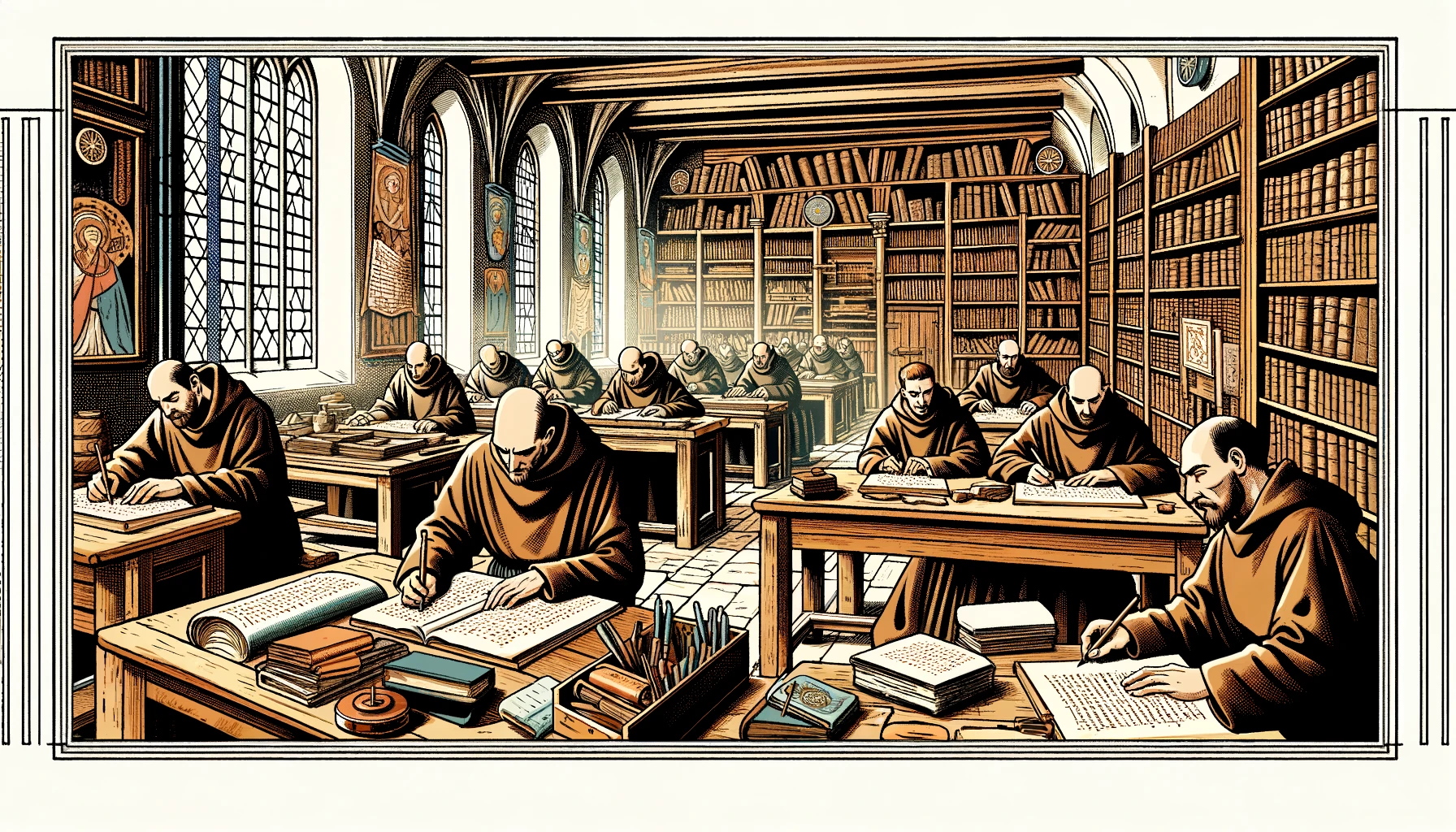
The fall of the Roman Empire led to significant changes in the European education system. During the Middle Ages, monastic schools and cathedral schools became the primary centers for learning. Monasteries played a crucial role in preserving classical knowledge and texts through their scriptoria, where manuscripts were copied and studied.
The Rise of Universities
The 12th and 13th centuries witnessed the emergence of universities, which represented a significant evolution in the concept of schooling. The University of Bologna (founded around 1088), the University of Paris, and the University of Oxford were among the first to emerge in Europe. These institutions formalized higher education, offering structured courses of study and degrees in various disciplines.
The Renaissance and Humanist Education

The Renaissance brought about a revival of interest in classical learning and a new humanist approach to education. Humanist educators like Erasmus and Montaigne emphasized the study of humanities – literature, history, philosophy, and arts – believing that this type of education could develop well-rounded and morally upright individuals.
The Industrial Revolution and Modern Schooling
The Industrial Revolution was a turning point in the history of education. The shift from an agrarian to an industrial society created a demand for a different kind of education – one that could provide the workforce with the necessary skills for industrial jobs.

Horace Mann – The Father of the American School System
In the United States, Horace Mann is often credited with being the “Father of the American School System.” Mann, a politician and educational reformer of the 19th century, advocated for universal public education. He believed that common schooling could provide equal opportunities to all children, regardless of their background, and thus was essential for a healthy democracy.
Compulsory Education Laws
The 19th and 20th centuries saw the introduction of compulsory education laws in many countries. These laws required children to attend school up to a certain age, making education accessible to a wider population and ensuring a basic level of literacy and numeracy across societies.
The 20th Century and Beyond – Expanding Horizons
The 20th century witnessed unprecedented changes and expansions in the field of education. The introduction of progressive educational theories, the impact of technological advancements, and the increasing recognition of the need for inclusive and diverse educational practices have all shaped modern schooling.

John Dewey and Progressive Education
John Dewey, an American philosopher and educator, was a prominent advocate for progressive education in the early 20th century. Dewey’s emphasis on experiential learning, critical thinking, and the integration of practical life skills into the curriculum significantly influenced educational theory and practice.
Technology and Education
The advent of digital technology has revolutionized education in the late 20th and early 21st centuries. The internet, multimedia resources, and online learning platforms have transformed traditional educational methodologies, making learning more accessible, interactive, and customized.
Inclusion and Equity in Education
In recent decades, there has been a growing emphasis on making education inclusive and equitable. Efforts are being made to ensure that students from all backgrounds, including those with disabilities, have access to quality education. The recognition of different learning styles and the importance of emotional and social learning are also changing the face of education.
Conclusion
So, who invented school? The answer is complex and multifaceted. School, as an institution, is not the brainchild of a single individual or culture. It is the result of a long and continuous process of evolution, influenced by various societies, cultures, and historical contexts. From the ancient civilizations of Egypt, Mesopotamia, and Greece to the modern digital classrooms, the concept of school has been constantly evolving. Figures like Quintilian, Plato, Horace Mann, and John Dewey, among others, have all played pivotal roles in shaping education throughout history.
As we look to the future, the journey of education continues to evolve, driven by societal needs, technological advancements, and a deeper understanding of human learning. The story of who invented school is not just about the past; it’s an ongoing narrative that shapes our present and future.
